Piano lessons in Burlington are one of the most popular ways for children to begin their musical journey. For many families, piano feels like the “classic” first instrument—and for good reason. It offers a clear visual layout, builds strong musical fundamentals, and helps children develop confidence, coordination, focus, and creativity.
But before signing up, many parents have practical questions: What age should my child start? Do we need a piano at home? How much practice is realistic? And how do we know if our child is ready?
The good news is that piano is one of the most beginner-friendly instruments for children, especially when lessons are structured around the student’s age, personality, and learning style.
Did you know? At Capstone Music in Burlington, piano lessons are available for kids, teens, and adults, with experienced instructors who tailor lessons to each student’s goals and pace. Learn more about piano lessons in Burlington, contact us, or register for lessons.
Why Piano Is a Great First Instrument
Piano is often recommended as a first instrument because it makes music easier to see and understand. Notes are arranged in a straight line from low to high, and each key produces a consistent sound. This helps beginners connect what they see, hear, and play.
For children, this visual structure can make early learning less frustrating. They can quickly understand simple melodies, patterns, rhythm, and basic chords. Unlike some instruments, piano does not require breath control, finger calluses, or complex tuning before a student can make a clean sound.
Piano also provides a strong foundation for learning other instruments later. Students who begin with piano often develop a better understanding of rhythm, harmony, melody, and music theory—skills that can transfer to guitar, voice, drums, or other instruments.
What Age Should Children Start Piano Lessons?
There is no perfect age for every child, but many children begin piano lessons around ages five to seven. Some may be ready earlier, while others benefit from waiting until they have more focus, hand coordination, and comfort following instructions.
A child may be ready for piano lessons if they can:
- Sit and focus for short periods
- Follow simple directions
- Recognize patterns
- Show interest in music
- Use both hands with some coordination
- Practice with parent support at home
For younger children, the goal is not perfection. Early piano lessons should be encouraging, playful, and structured in a way that helps the child build confidence.
Do You Need a Piano at Home?
Families do not necessarily need a full acoustic piano to get started. A good beginner keyboard or digital piano can work well, especially during the first stage of lessons.
Ideally, a home instrument should have:
- Full-size keys
- Touch-sensitive response
- A stable stand or bench setup
- A comfortable practice space
- Enough range for beginner songs and exercises
The key is consistency. Even a modest keyboard is far better than having no instrument available for practice. As a child progresses, families can decide whether to upgrade to a higher-quality digital piano or acoustic piano.
What Happens in Beginner Piano Lessons?
Beginner piano lessons usually focus on building comfort at the instrument while introducing basic musical skills step by step.
Students may learn:
- Proper sitting position and hand shape
- Finger numbers and simple patterns
- Rhythm and counting
- Note names
- Short melodies
- Basic chords
- Reading beginner music
- Listening skills and musical expression
A good instructor will balance structure with enjoyment. Children should learn fundamentals, but they should also feel proud of what they can play. That sense of progress is what keeps students motivated.
How Much Should Kids Practice?
For beginners, short and consistent practice is much more effective than long, stressful sessions. Many young students do well with 10 to 15 minutes of practice, several days per week.
The goal is to make practice feel manageable. Parents can help by:
- Setting a predictable practice routine
- Keeping sessions short
- Offering encouragement
- Avoiding criticism during practice
- Celebrating small wins
- Asking the teacher what to focus on each week
For younger children, parent involvement matters. A child may enjoy lessons but still need reminders and support at home. That is normal.
Choosing Piano Lessons in Burlington
For families searching for piano lessons in Burlington, convenience matters—but the right learning environment matters even more.
When comparing lesson options, look for:
- Experienced piano teachers
- A supportive studio atmosphere
- Lessons tailored to age and skill level
- Opportunities for progression
- Clear communication with parents
- Performance or recital opportunities
- A program that keeps students engaged
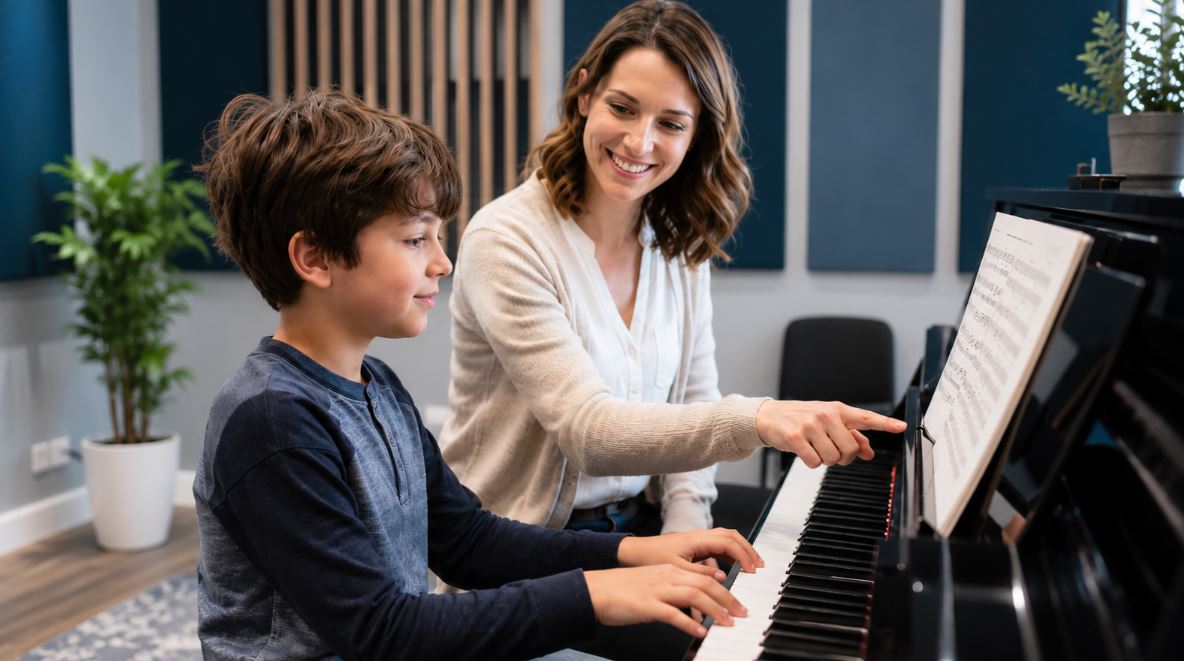
Private piano lessons can be especially helpful because the instructor can adjust the pace to the student. Some children need more repetition, while others move quickly and need extra challenge. The best lessons meet the student where they are.
Capstone’s piano teachers page is also a helpful internal resource for parents who want to understand the experience and background of the instructors.
Piano Lessons and Child Development
Music education can support much more than musical ability. It can help children build discipline, listening skills, memory, confidence, and emotional expression. The Royal Conservatory of Music notes that music education can help children develop creatively, intellectually, and socially, making it a valuable part of a child’s growth.
This does not mean every child needs to become an advanced pianist. For many families, the real value is in helping a child develop patience, focus, creativity, and pride in learning something new.
What If My Child Is Nervous or Unsure?
It is very common for children to feel nervous before their first piano lesson. They may worry about making mistakes, meeting a new teacher, or not knowing what to expect.
Parents can help by framing lessons as an opportunity to explore, not a test. A beginner is not supposed to know how to play yet. The purpose of lessons is to learn gradually in a supportive environment.
It can also help to visit the music school, meet the teacher, or start with a trial-style mindset: “Let’s try it and see how it feels.” Removing pressure often makes the experience more positive.
Piano Lessons for Teens and Adults
Although many students start piano as children, it is never too late to begin. Teens and adults often learn well because they bring clearer goals, stronger focus, and personal music preferences.
Adult beginners may want to:
- Learn favourite songs
- Return to music after years away
- Reduce stress
- Build a creative hobby
- Improve music theory knowledge
- Support singing or songwriting
The piano is flexible enough to support many goals, from classical training to pop songs, worship music, jazz, and personal enjoyment.
Helping Your Child Stay Motivated
Motivation often grows when students feel progress. That progress does not always look dramatic week to week, but small improvements add up.
Parents can support motivation by:
- Letting children choose some songs they enjoy
- Keeping practice positive
- Attending recitals or showcases
- Praising effort, not only results
- Staying in communication with the teacher
- Avoiding comparisons with siblings or classmates
The most successful students are not always the ones who practice the longest. They are often the ones who feel supported, encouraged, and connected to the music they are learning.
Building Confidence One Lesson at a Time
Piano lessons can be a wonderful starting point for children in Burlington who are ready to explore music. With the right teacher, a supportive environment, and realistic expectations at home, students can build musical skills while also developing confidence, focus, and creativity.
For parents, the best first step is simple: choose a lesson environment where your child feels comfortable, encouraged, and excited to keep learning. From there, the piano can become more than an instrument—it can become a lifelong source of enjoyment, expression, and growth.