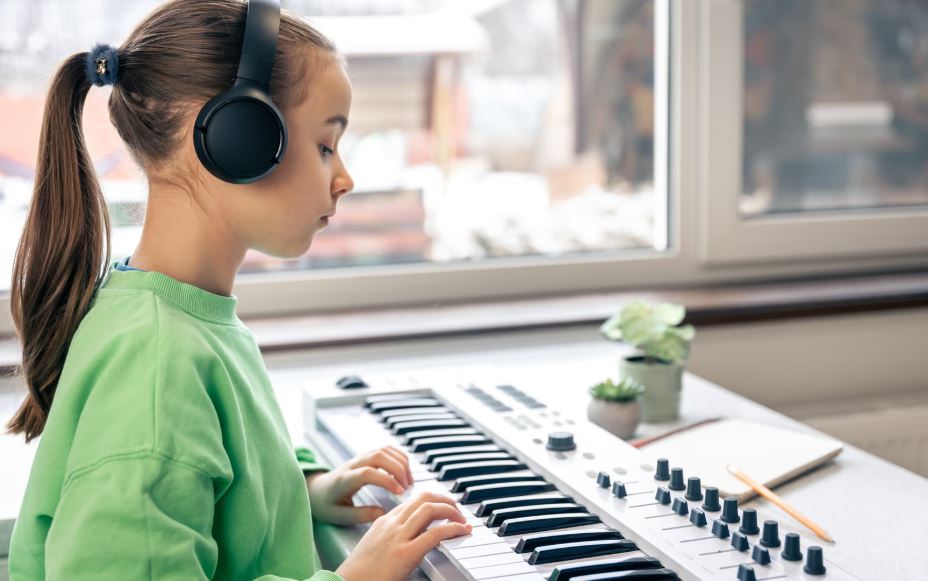
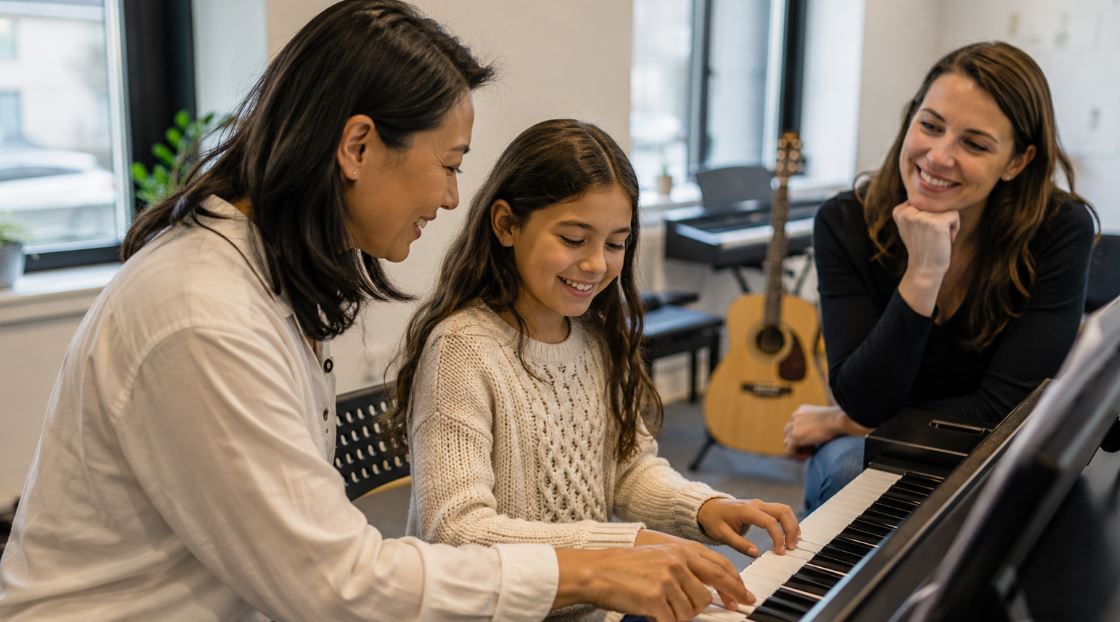
Moving to a new city comes with a long list of family decisions: schools, childcare, sports, after-school activities, summer programs and routines that help everyone feel settled. For many families, music lessons become part of that conversation. A child may be asking to learn piano, guitar, drums or singing. Or a parent may be looking for an activity that builds confidence, creativity and consistency outside the classroom.
If you are new to Burlington, choosing music lessons for your child can feel surprisingly overwhelming. There are different instruments, lesson formats, teacher styles, schedules and costs to consider. Some children know exactly what they want to play. Others are curious about music but need help choosing where to start.
The good news is that there does not need to be one perfect first choice. A strong music lesson experience should help your child feel encouraged, supported and excited to keep learning. Whether your family lives near Headon Forest, Millcroft, Palmer, Mountainside, Brant Hills, The Orchard, Alton Village or the Upper Middle Road area, the right local music studio can make lessons easier to fit into your weekly routine.
The Royal Conservatory of Music notes that music education can help children develop creatively, intellectually and socially. But for parents, the practical question is often simpler: what type of lesson will my child actually enjoy enough to stick with?
Local note: For families looking for music lessons in Burlington, Capstone Music is located at 1500 Upper Middle Road and offers lessons for children, teens and adults in piano, guitar, drums, vocals, ukulele, bass and songwriting.
Start with your child’s personality, not just the instrument
Parents often begin by asking, “Should my child start with piano or guitar?” That is a fair question, but it may not be the best first question. A better place to start is your child’s personality.
Some children like structure and enjoy learning step by step. Others want to play songs they recognize as quickly as possible. Some are shy but curious. Others love to perform. Some children need a quiet, focused activity, while others are drawn to rhythm, energy and movement.
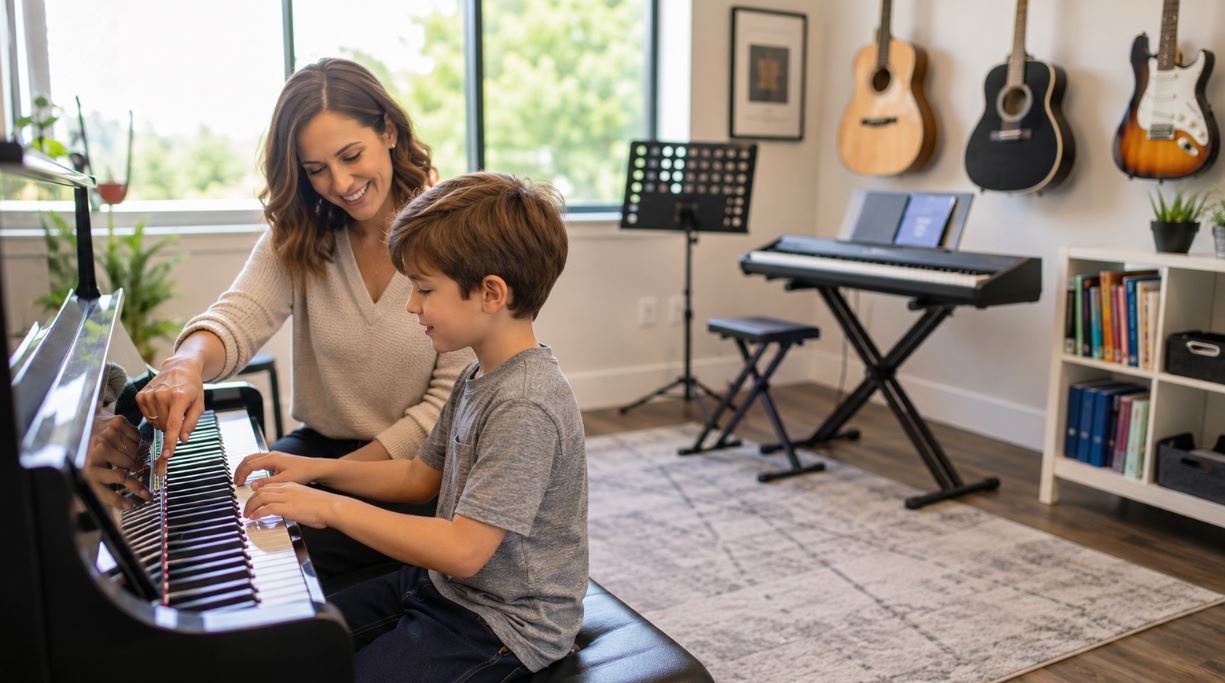
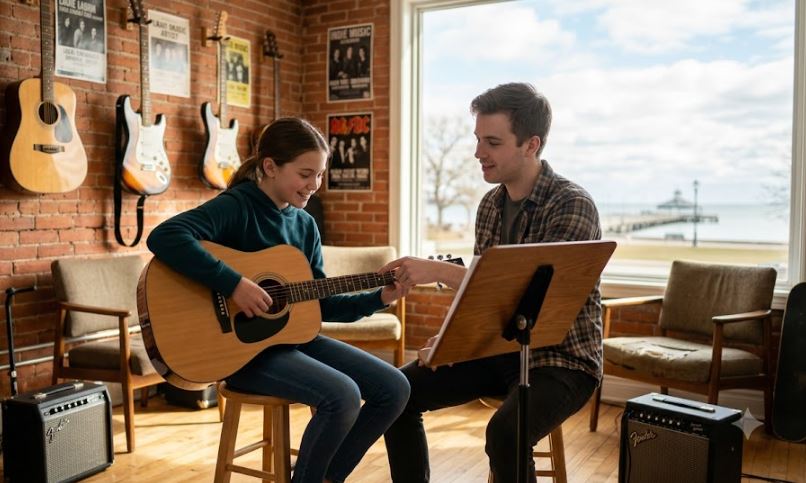
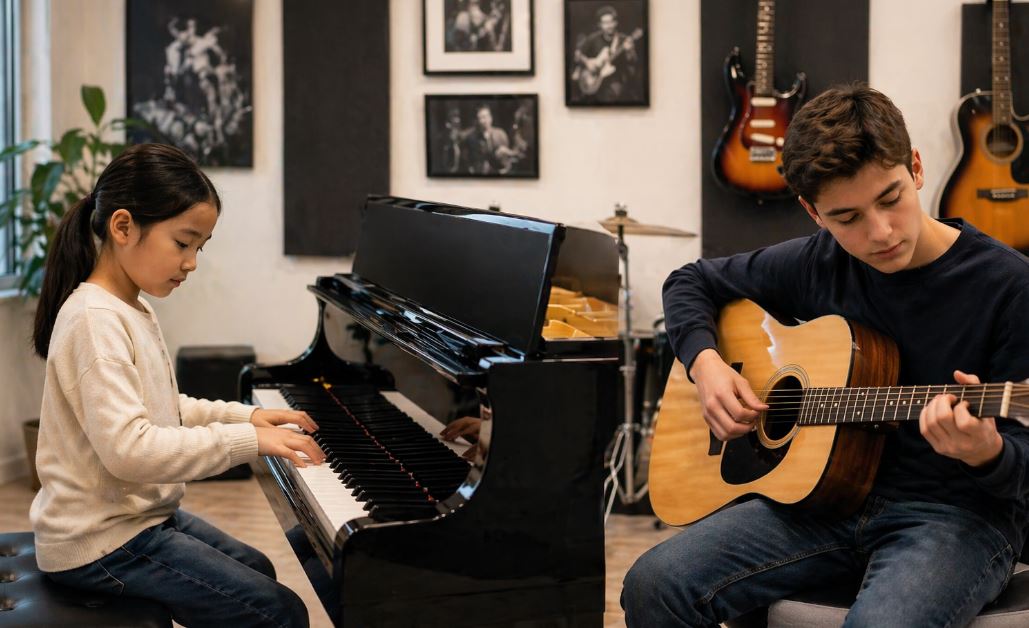
Different instruments can suit different learning styles. Piano can be a wonderful foundation because notes are laid out visually and students can learn melody, rhythm and harmony in a clear way. Guitar can appeal to kids who love popular music and want to sing or play along with favourite songs. Drums can be a great fit for energetic children who enjoy rhythm and coordination. Singing lessons can help children develop confidence, pitch, breath control and performance skills.
There is no universal “best” instrument for every beginner. The best first instrument is usually the one your child is most interested in and the one they are most likely to practise without constant pressure.
Consider whether your child is ready for private lessons
Readiness matters. Some children are eager to begin lessons and can focus well in a one-on-one setting. Others may need a slower introduction to music before committing to regular private instruction.
A child does not need to be naturally “musical” before starting lessons. In fact, lessons are where musical skills are built. But it helps if they can listen to instructions, try something more than once, accept gentle correction and stay engaged for the lesson length.
Signs your child may be ready include:
- They show interest in a specific instrument or singing.
- They enjoy music at home, in the car or at school.
- They can focus for short periods with adult guidance.
- They are willing to practise a little between lessons.
- They are excited by the idea of learning songs.
If your child is unsure, it may help to book an introductory lesson or speak with a local music studio about which instrument and teacher could be a good fit.
Choose a teacher who understands children
The teacher is often more important than the instrument. A great teacher can help a child feel capable, even when learning feels challenging. A poor fit can make lessons feel stressful, even if the child likes the instrument.
For younger students, patience and encouragement are essential. Children need structure, but they also need lessons to feel positive. They should leave feeling like they improved, not like they failed a test.
When comparing music lesson options in Burlington, look for teachers who can adjust to the student’s age, interests and pace. A child who wants to play pop songs may not respond well to a strictly classical approach right away. A child who enjoys structure may do well with method books, technique and gradual progress. A teen may want a teacher who can help with songwriting, performance, recording or preparing for school music opportunities.
Reviewing a studio’s about page or teacher information can help you understand the teaching philosophy before registering.
Think about your family schedule honestly
Music lessons work best when they fit your real life. A studio may be excellent, but if the location or lesson time is difficult, consistency becomes harder.
For Burlington families, it is worth considering how lessons fit around school pickup, work schedules, sports practices, dance, tutoring, homework and weekend plans. A location near familiar routes, such as Upper Middle Road, can make a weekly activity easier to maintain.
Before registering, ask yourself:
- Can we realistically get to lessons every week?
- Is the lesson time manageable during the school year?
- Will my child be too tired at that time of day?
- Can we build short practice sessions into the week?
- Do we understand cancellation, makeup and payment policies?
Parents should also review the studio’s lesson rates and policies before starting. Clear expectations make it easier to avoid confusion later.
Match the lesson choice to your child’s goals
Not every child has the same goal. Some want to play for fun. Some want to perform. Some want to join a band. Some are preparing for school music, auditions or exams. Others simply need a creative outlet that is not competitive.
For beginners, the goal may be as simple as building confidence and learning a few songs. That is perfectly valid. Music lessons do not have to turn every child into a professional musician. They can help children develop patience, focus, creativity and the satisfaction of gradual improvement.
If your child is interested in a specific instrument, it can help to review the lesson options available:
- Piano lessons for children who may benefit from a strong musical foundation.
- Guitar lessons for students interested in chords, songs, rock, pop or acoustic playing.
- Singing lessons for children and teens who love to sing and want to build confidence.
- Drum lessons for students drawn to rhythm, coordination and energy.
If your child is not sure where to begin, a general music lessons page can help you compare the available options.
Do not underestimate the value of enjoyment
Parents sometimes worry about choosing the “right” instrument too early. But for many beginners, enjoyment matters more than strategy. A child who enjoys lessons is more likely to practise, stay engaged and build momentum.
That does not mean lessons should be effortless. Learning music involves repetition, patience and moments of frustration. But the overall experience should feel encouraging. Your child should feel that progress is possible.
If a child is excited by guitar, starting with guitar may be better than forcing piano because it seems more traditional. If a child loves to sing, vocal lessons may be the right first step. If a child taps rhythms constantly, drums may be a natural fit. If a child likes structure and patterns, piano may be ideal.
The best music lesson choice is often the one that creates the strongest connection between the child and the music.
Ask the right questions before registering
If you are choosing music lessons in Burlington for the first time, a few questions can make the decision easier:
- Do you teach beginners?
- What ages do you work with?
- How do you match students with teachers?
- Can my child switch instruments later if needed?
- How much practice is expected between lessons?
- Are there performance opportunities?
- What happens if we miss a lesson?
- Do you offer lessons for teens or adults too?
- How do we register?
These questions help you understand whether the studio is a good fit for your child’s age, personality and schedule.
FAQ
What is the best first instrument for a child?
There is no single best first instrument for every child. Piano is often a strong foundation, but guitar, singing, drums and ukulele can also be excellent choices depending on the child’s interests and personality.
How old should a child be to start music lessons?
Readiness depends on the child, the instrument and the lesson format. Many children can begin private lessons once they can follow instructions, focus for a short period and show interest in learning.
How much should my child practise?
For beginners, short and consistent practice is usually better than long sessions. Even 5 to 10 minutes several times per week can help a child build confidence and remember what they learned.
What if my child wants to change instruments?
That is common. A child may start with one instrument and discover another that suits them better. The early goal is to build musical curiosity and confidence, not to force a permanent decision immediately.
Where can Burlington families ask about music lessons?
Families looking for local music lessons can contact Capstone Music to ask about available lesson options, teacher fit and registration.