Have you always wanted to play an instrument or learn to sing—but assumed you missed your chance?
The short answer is no. Adults can absolutely learn music, whether they are starting completely from scratch or returning to an instrument they last played decades ago. You do not need childhood training, natural talent or hours of free time. You need an instrument that interests you, realistic expectations and instruction suited to the way adults learn.
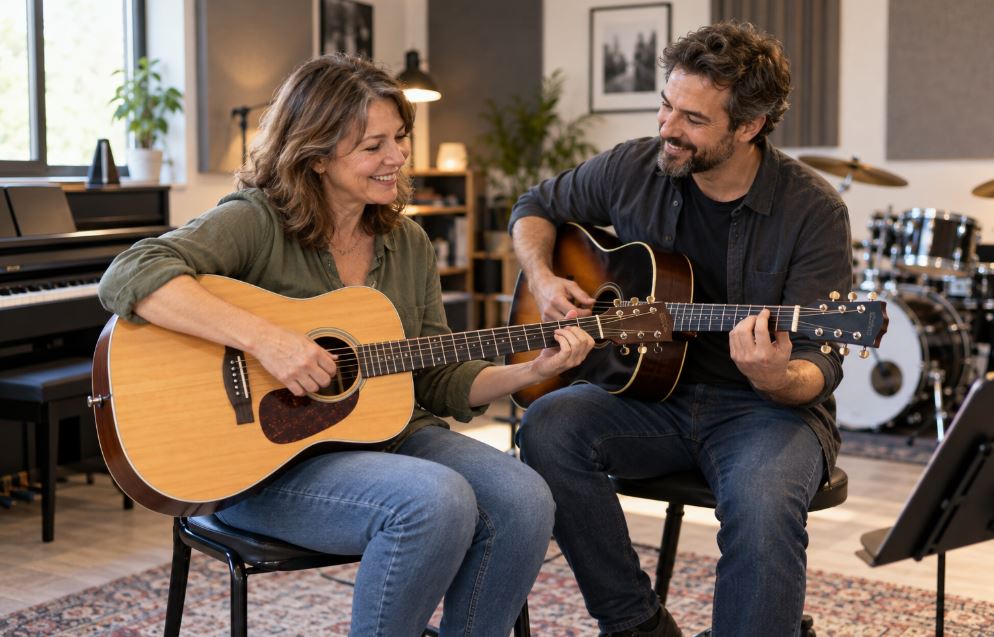
At Capstone Music, our adult music lessons in Burlington are personalized around each student’s experience, musical interests and goals. Adults can learn piano, guitar, drums, ukulele or singing in a welcoming environment where being a beginner is completely normal.
Can Adults Really Learn an Instrument?
Yes. Musical ability is not something that closes off after childhood.
Children may sometimes develop certain physical skills quickly, but adults bring their own advantages to lessons. They are generally better able to understand explanations, recognize patterns, set personal goals and connect practice with music they already know and enjoy.
Adults also tend to know why they want to learn. That motivation matters.
You might want to:
- Play favourite songs on guitar or piano
- Improve your singing voice
- Join a band, choir or worship group
- Perform for family and friends
- Return to an instrument you once played
- Develop a creative outlet outside work
- Finally pursue something you have postponed for years
Your goal does not have to involve performing publicly or reaching an advanced level. Learning enough to play music for your own enjoyment is a perfectly worthwhile objective.
Even adults beginning much later in life can acquire meaningful musical skills. In one recent study, musically inexperienced adults with an average age of approximately 69 participated in a year of weekly piano instruction and demonstrated measurable development in several musical abilities. The researchers concluded that musically inexperienced older adults can acquire a broad range of musical skills. Review the published research on musical skill development in older adults for more detail.
Is Learning Music Harder for Adults?
Some parts may feel challenging, but “challenging” does not mean “too late.”
An adult beginner may need time to develop finger strength, coordination, rhythm or comfort using their voice. Reading music can also feel unfamiliar at first. These are normal parts of learning—not evidence that someone lacks musical ability.
Adults sometimes create an additional challenge for themselves: they expect to be good too quickly.
A child may play the same simple piece repeatedly without judging the experience. An adult may compare those first attempts with the polished version of a song they have heard for years. That gap can make perfectly normal beginner progress feel inadequate.
A good teacher helps break music into manageable steps, correct problems before they become habits and keep expectations realistic. Improvement is usually gradual, but those small gains accumulate.
What Is the Best Instrument for an Adult Beginner?
There is no single best instrument for every adult. The best choice is usually the one you are genuinely excited to practise.
Piano
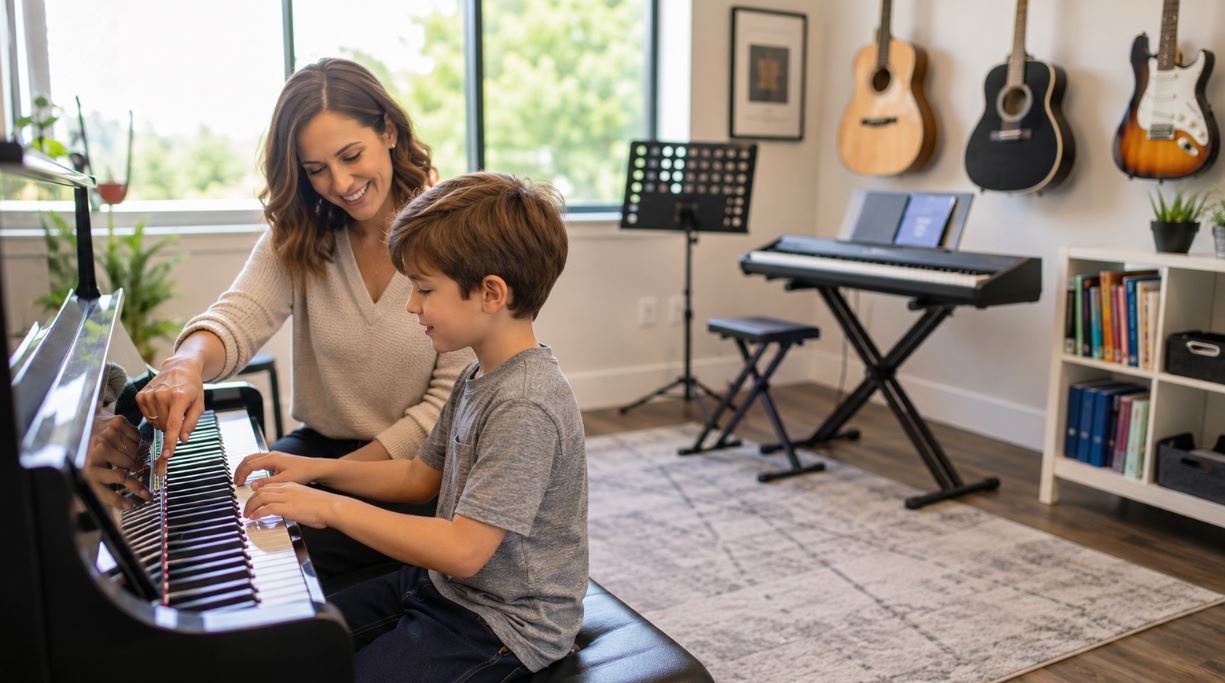
Piano gives beginners a clear visual layout of notes. It can provide an accessible introduction to melody, chords, rhythm and music theory.
A digital keyboard can also be used with headphones, making piano practical for adults who live in a condo or share their home with others.
Guitar
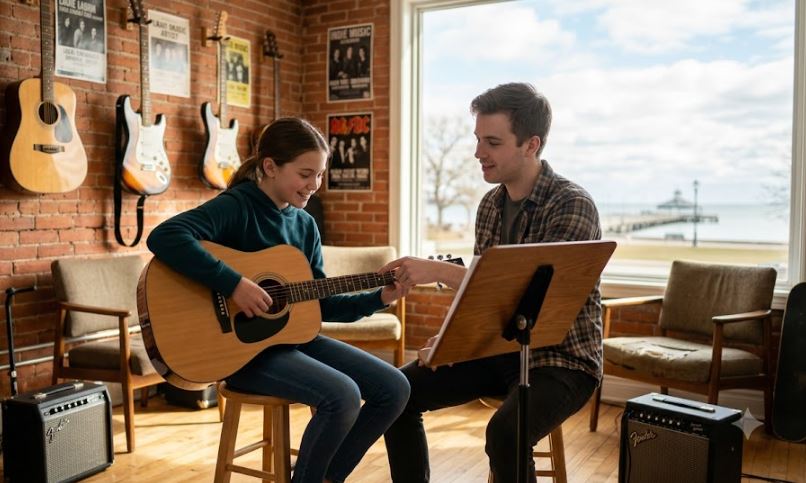
Guitar is a strong choice for adults who want to play pop, rock, folk, country or singer-songwriter music.
The first few chords may require patience while finger strength develops, but those chords can eventually unlock a large catalogue of familiar songs. Guitar is also portable and well suited to casual or social playing.
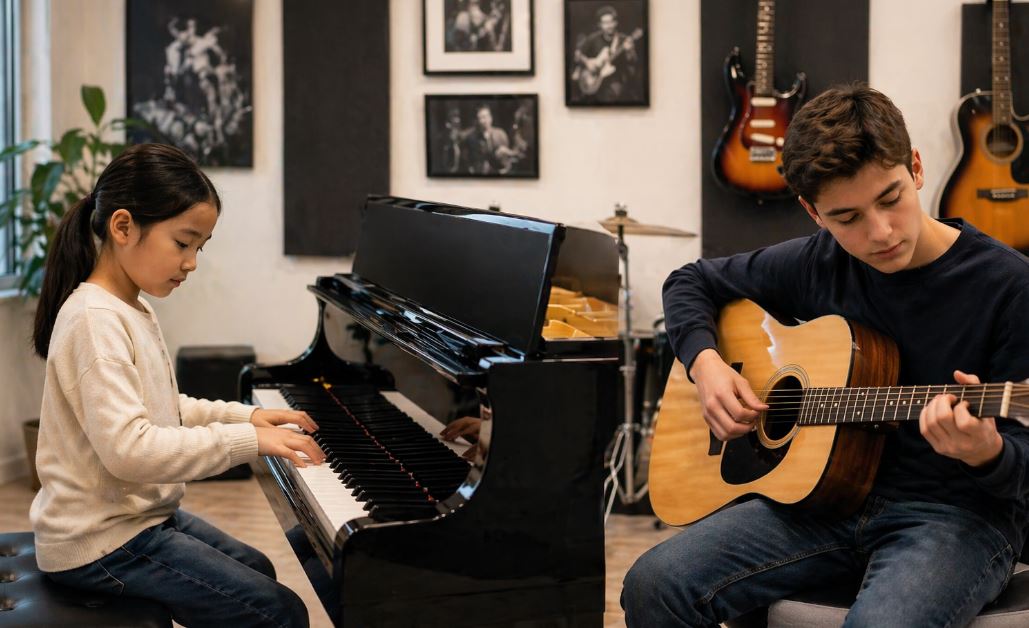
If these are the two instruments you are considering, Capstone’s piano-versus-guitar guide for beginners provides a more detailed comparison.
Singing
You already carry your voice with you, but professional instruction can help you use it more confidently and comfortably.
Adult singing lessons can address pitch, breathing, tone, range, song interpretation and performance confidence. They can be valuable whether your goal is singing in a choir, preparing for an audition, performing onstage or simply enjoying your favourite songs.
Drums
Drumming appeals to adults who connect strongly with rhythm and prefer active, physical learning.
Electronic kits and practice pads can make home practice more manageable than many prospective drummers expect. Lessons can begin with timing, stick control and coordination before moving into complete songs.
Ukulele
The ukulele is compact, accessible and relatively easy to begin playing. Basic chord shapes can be less physically demanding than guitar chords, and beginners can often accompany simple songs fairly quickly.
It can be an excellent choice for someone who wants a portable instrument and a relaxed introduction to making music.
What Happens During Your First Music Lesson?
Your first lesson should not feel like an audition.
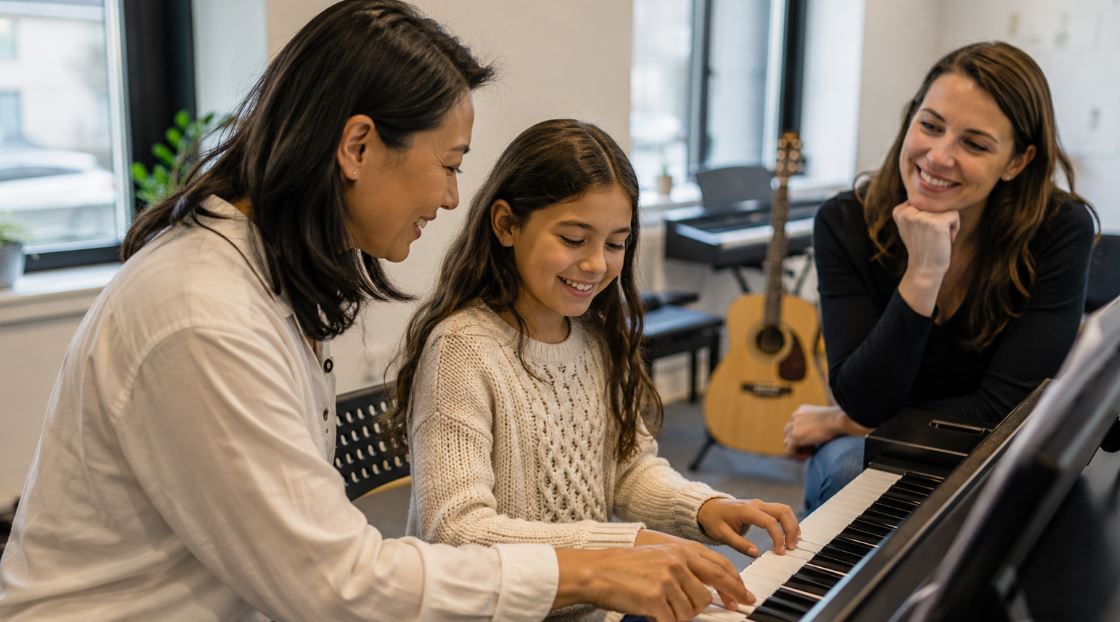
The teacher will usually ask about your experience, musical preferences and what you hope to accomplish. If you previously played an instrument or sang, the instructor may also want to understand what you remember and where you feel uncertain.
A first lesson may include:
- Learning how to hold or position the instrument
- Trying a few notes, chords, rhythms or vocal exercises
- Discussing songs you would eventually like to learn
- Identifying any previous experience
- Establishing a comfortable starting point
- Receiving a simple activity to practise before the next lesson
You are not expected to arrive already knowing how to read music. You also do not need to perform in front of other students. Private instruction gives you room to learn at your own pace.
How Much Practice Does an Adult Beginner Need?
Consistency is more useful than occasional marathon practice.
You do not necessarily need to find an uninterrupted hour every day. For many adult beginners, several short and focused practice sessions during the week are more realistic and productive.
Your teacher may recommend a routine such as:
- Reviewing the material while it is still fresh after a lesson
- Practising one difficult section rather than repeatedly starting from the beginning
- Slowing the music down before trying to increase speed
- Dividing practice between technique and enjoyable songs
- Keeping the instrument visible and readily accessible
- Choosing regular practice times that fit your schedule
The right amount of practice depends on your instrument, goals and availability. Someone preparing for an audition will require a different routine from someone learning guitar for relaxation.
Progress may be slower during a busy month and faster during another. Adult lessons should accommodate real life rather than making music feel like another source of pressure.
Do You Need to Own an Instrument Before Starting?
Not always—but you will eventually need a practical way to practise between lessons.
Before making a major purchase, it can be wise to speak with your teacher or the music school. Beginner instruments vary considerably in quality, size and suitability. Buying the least expensive option can sometimes make learning unnecessarily frustrating, while purchasing professional equipment immediately may be more than you need.
A teacher can help you understand:
- What features matter for a beginner
- Whether a used instrument is appropriate
- What size or model may suit you
- Whether headphones or volume control are important
- Which accessories are actually necessary
- When it makes sense to upgrade
If uncertainty about equipment is stopping you from beginning, ask first. You do not need to solve every practical detail before contacting a teacher.
What If You Tried Music Before and Quit?
Returning students are extremely common.
You may remember more than you expect, even if your hands or voice initially feel out of practice. Rhythm, note recognition and physical technique can return gradually with repetition.
This time, you also get to approach music differently.
Perhaps childhood lessons focused on examinations or repertoire you did not enjoy. As an adult, your goals can guide the experience. You may want to learn favourite songs, accompany yourself while singing, improvise, explore songwriting or simply play without preparing for formal evaluations.
Previous lessons are not a failed attempt. They are a starting point your teacher can build upon.
How Do You Choose the Right Music Teacher?
Technical expertise matters, but the teacher-student fit matters too.
Adult beginners often do best with instructors who can:
- Explain concepts without assuming previous knowledge
- Connect exercises to music the student enjoys
- Adjust expectations around work and family commitments
- Offer encouragement without being patronizing
- Provide enough structure to create progress
- Adapt lessons to recreational or performance goals
- Make it comfortable to ask basic questions
Capstone’s music teachers are active musicians with different instruments, backgrounds and teaching styles. Sharing your goals when you inquire can help the studio identify an appropriate teacher.
You can also review Capstone’s lesson rates and policies before registering.
How Quickly Can an Adult Learn to Play?
That depends on what “learn to play” means to you.
An adult may be able to play a simple melody, rhythm or chord progression relatively early. Playing complete songs smoothly, developing reliable technique or performing confidently will take longer.
Progress is influenced by:
- The instrument you choose
- Previous musical experience
- Practice consistency
- Coordination and physical comfort
- The difficulty of your chosen music
- Your specific goals
- The quality of instruction
It is more helpful to measure progress against where you were a month ago than against an experienced musician.
Small milestones matter: changing between two chords smoothly, maintaining a steady beat, singing a phrase with greater control or playing a recognizable melody. These are the building blocks of larger musical goals.
Starting Adult Music Lessons in Burlington
The hardest part for many adults is not learning the first chord or note. It is deciding to begin.
You do not need to wait until work becomes less busy, until you feel naturally musical or until you have chosen the perfect instrument. Those conditions may never arrive. Starting with one lesson and a clear, manageable goal is enough.
Capstone Music provides private music lessons for adult beginners at its Burlington music centre at 1500 Upper Middle Road. Whether you want to learn piano, guitar, drums, ukulele or singing, your instruction can be shaped around your pace and the music you want to play.
If music is something you have always wanted to pursue, it is not too late. Contact Capstone Music to discuss your interests, current lesson availability and the best way to get started.