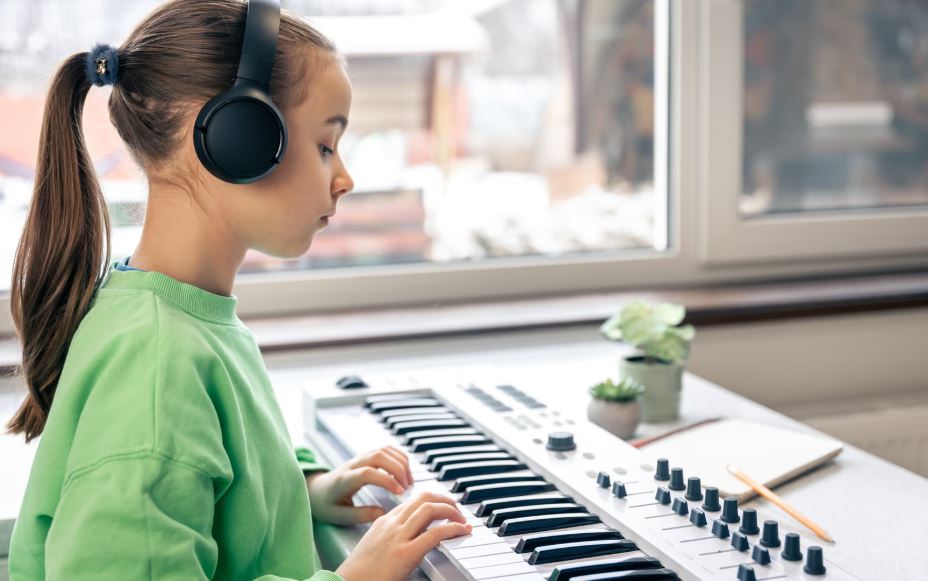

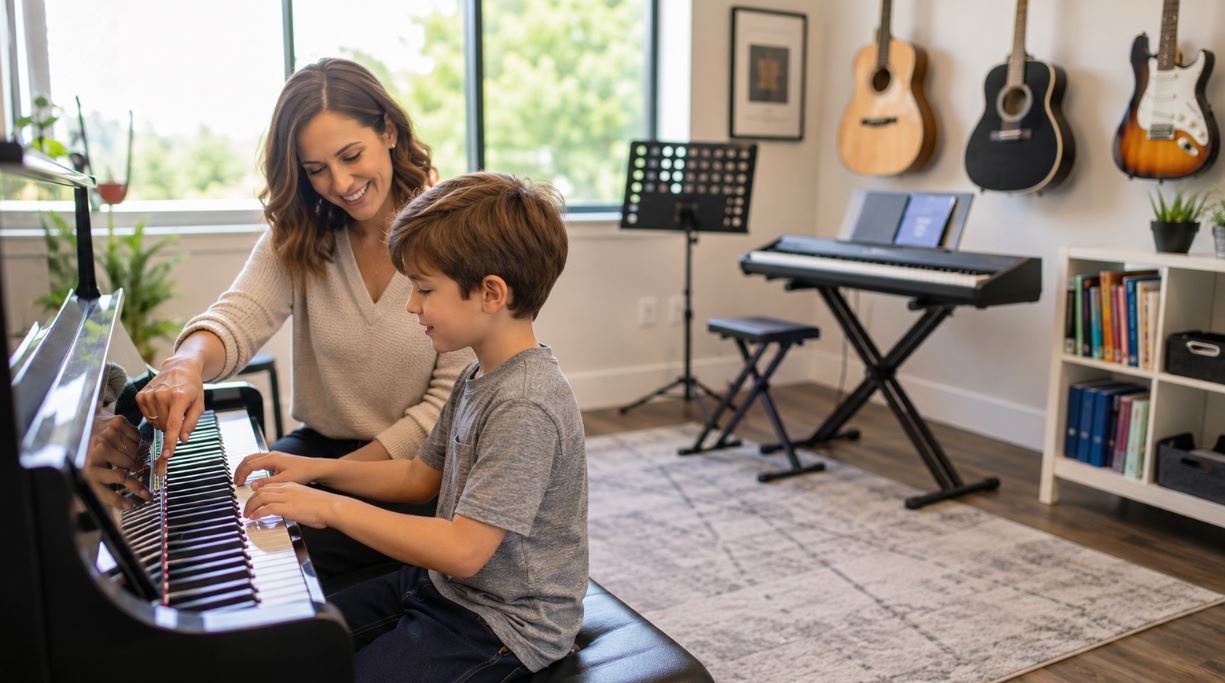
If your child loves singing around the house, tapping out rhythms on the kitchen table or stopping to watch every musician they see, you may already be wondering: Is it time to start music lessons?
For many Burlington parents, the question is less about finding a specific “perfect age” and more about knowing whether their child is ready to enjoy and benefit from one-on-one music instruction.
The good news is that there is no single age that works for every child.
Some children are ready to begin private lessons quite young. Others benefit from waiting until they can focus a little longer, follow instructions more comfortably or develop a stronger interest in a particular instrument.
At Capstone Music in Burlington, we teach children, teens and adults in piano, guitar, drums, vocals, ukulele, bass, songwriting and other areas of music. The best starting point is often not the number on a child’s birthday cake, but their interest, readiness and personality.
Here are some signs that your child may be ready to begin.
1. Your Child Is Genuinely Interested in Music
One of the strongest signs of readiness is also the simplest: your child keeps coming back to music.
Maybe they:
- Sing along enthusiastically to favourite songs
- Pretend to perform for the family
- Tap out rhythms
- Ask questions about instruments
- Want to try your guitar or piano
- Watch musicians closely
- Talk about learning a particular instrument
- Try to recreate songs they hear
That natural curiosity matters.
Children are much more likely to enjoy lessons and practise willingly when they have some ownership over the experience.
Parents can certainly introduce children to new instruments, but forcing a particular choice because it seems like the “right” first instrument is not always the best approach.
Sometimes the child who seems destined for piano falls in love with drums. Another may be fascinated by guitar, while a child who constantly sings may light up during vocal lessons.
Interest gives lessons somewhere meaningful to begin.
2. They Can Focus for a Short Period of Time
A young beginner does not need to sit perfectly still for an hour.
In fact, good music instruction for children should be engaging, varied and appropriate to their age.
But private lessons do require some ability to listen, respond and stay involved with an activity for a reasonable period of time.
According to The Royal Conservatory of Music, age-appropriate music education can help children build musical skills through listening, movement, rhythm, singing and instrumental exploration.
That doesn’t mean an energetic child isn’t ready.
An experienced teacher can adapt instruction to a child’s personality and learning style. A child who thrives on movement and rhythm, for example, may find drum lessons especially engaging.
The more useful question is:
Can my child engage with a teacher long enough to participate and try what is being taught?
If the answer is generally yes, that is a positive sign.
3. They Can Follow Simple Instructions
Music lessons involve listening and then trying.
A teacher might ask a student to:
- Copy a rhythm
- Play several notes
- Change hand position
- Repeat a musical phrase
- Sing a melody back
- Try something more slowly
- Practise a particular section
A child does not need to execute every instruction perfectly. Learning how to do these things is part of the process.
But if they can understand a simple instruction and make an effort to follow it, private lessons can become productive very quickly.
This is one reason readiness can matter more than age.
Two children of exactly the same age can have very different attention spans, confidence levels and learning styles—and both can ultimately become excellent musicians.
4. Your Child Can Handle a Little Frustration
Learning an instrument is exciting, but not every part comes instantly.
Sometimes a chord buzzes.
Sometimes a rhythm feels awkward.
Sometimes a piano passage takes several tries.
Sometimes the note a singer wants simply doesn’t come out correctly the first time.
Children who can tolerate a small amount of trial and error are often in a good position to begin lessons.
They don’t need extraordinary patience. What matters is that they can try again with encouragement.
A good music teacher helps make those small challenges feel achievable rather than discouraging.
At Capstone, lessons are tailored to the student’s individual goals and pace rather than expecting every child to learn in exactly the same way. Capstone currently offers private lessons across a range of instruments for children and adults in Burlington.
5. They Have an Instrument They’re Excited About
One of the most common questions parents ask is:
Which instrument should my child start with?
There is no universal answer.
Piano
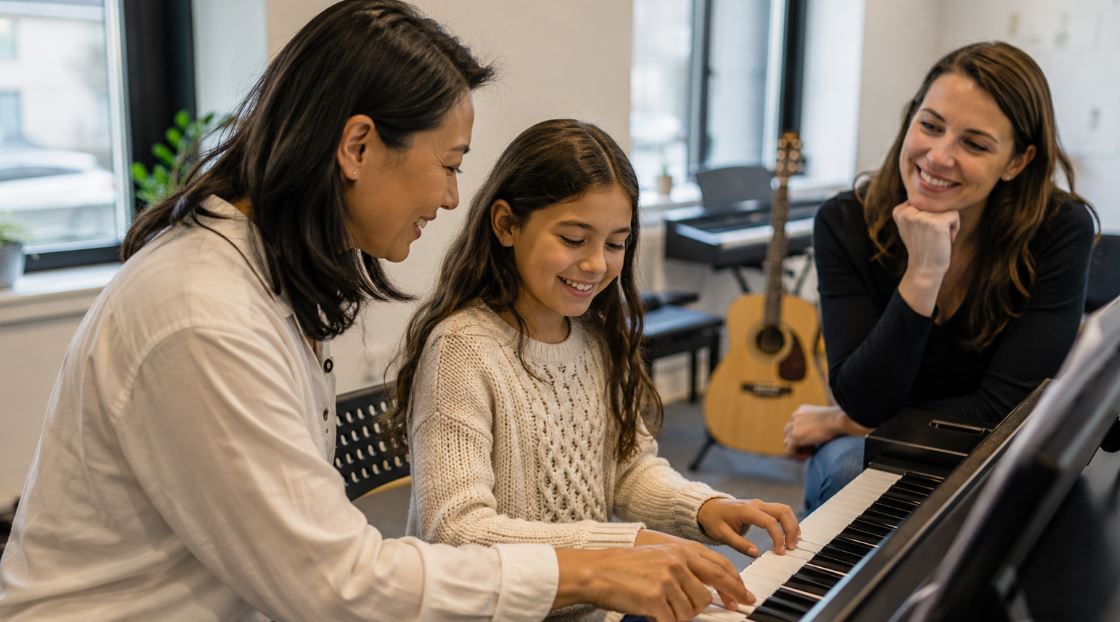
Piano lessons in Burlington can be a great starting point for many children because the keyboard provides a very visual way to understand notes, melody and harmony.
Children can also produce a clear sound immediately, which can make early learning rewarding.
Guitar
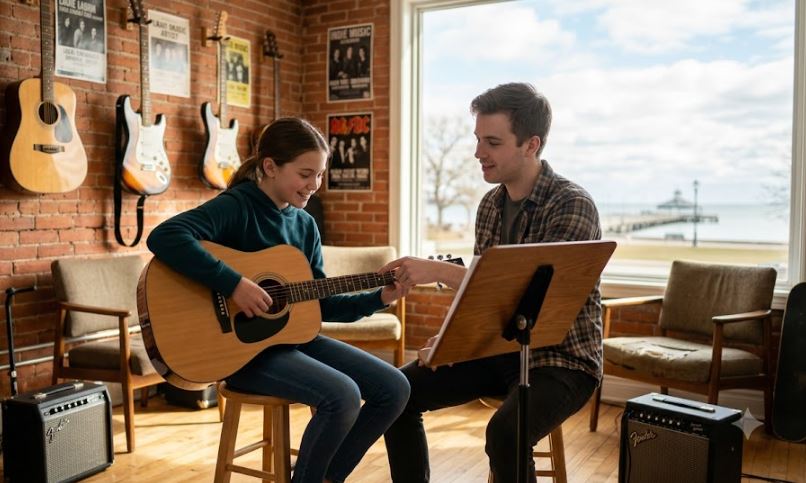
For a child who loves pop, rock, folk or singer-songwriter music, guitar lessons can be highly motivating.
The desire to eventually play favourite songs can provide a powerful reason to practise.
Drums
Energetic children who naturally gravitate toward rhythm may love drums.
Drumming can make musical concepts such as timing, tempo and coordination feel physical and immediate.
Singing
The voice is already an instrument a child carries everywhere.
Vocal lessons can help young singers develop pitch, breath control, musical awareness and performance confidence.
Ukulele
The ukulele can also be approachable for younger beginners because of its relatively small size and accessible chord shapes.
The right instrument is often the one your child is most excited to come back to next week.
So, What Age Can Children Start Music Lessons?
Parents naturally want a number, and age can provide a useful general guide—but it should not become a strict rule.
Early childhood is already an important period for musical exploration. The Royal Conservatory offers structured early-childhood music programming for children from infancy through age six, emphasizing age-appropriate activities such as singing, movement, rhythm, listening and instrumental exploration.
Private instrumental lessons are different.
Some children may be ready around age five or six, while others will enjoy the experience much more at seven, eight or later.
For younger children, teachers may need to:
- Keep activities shorter
- Change tasks frequently
- Incorporate musical games
- Use familiar songs
- Emphasize exploration
- Set modest practice expectations
As children grow, they typically become able to work on more complex technique, read music more independently and practise for longer periods.
There is no prize for starting first.
The goal is to begin when the child is ready to have a positive relationship with learning music.
What If My Child Is Already 10, 12 or 15?
They are absolutely not too late.
In some ways, older beginners have advantages.
They may:
- Understand instructions more quickly
- Have better-developed motor skills
- Know exactly what music they like
- Practise more independently
- Set personal goals
- Progress through early concepts relatively quickly
A teenager who has suddenly become passionate about guitar does not need to wish they started at six.
Motivation is enormously valuable.
In fact, an older beginner who truly wants to learn may progress much more enthusiastically than a younger student who was enrolled before they were interested.
And music certainly isn’t limited to children. Capstone also offers music lessons for adults who are beginning for the first time or returning to an instrument later in life.
Does My Child Need to Practise Every Day?
Parents sometimes hesitate to start lessons because they imagine an immediate commitment to long daily practice sessions.
For a beginner, consistency is generally more important than intensity.
A short, focused practice session several times during the week can be far more productive than a long session that turns music into a chore.
The appropriate amount of practice depends on:
- The child’s age
- Their instrument
- Their experience level
- Their goals
- Their teacher’s recommendations
Most importantly, families should try to create a routine where practice feels like a normal part of learning rather than a constant source of conflict.
The Teacher Matters as Much as the Instrument
A child’s first music teacher can shape how they feel about music for years.
Technical ability matters, but so does the ability to teach.
Children benefit from instructors who can:
- Communicate clearly
- Encourage without pressuring
- Adjust to different personalities
- Make lessons engaging
- Recognize when a student needs more challenge
- Recognize when they need more time
- Connect exercises to music the student actually enjoys
Capstone’s teaching team includes active musicians and performers, with lessons designed around each student’s individual goals and pace.
That relationship can be particularly important for a young beginner.
A great teacher doesn’t simply teach notes. They help the student experience the satisfaction of getting better at something they care about.
How Music Lessons Can Benefit Children Beyond Music
Parents often enroll their child because they want them to learn an instrument.
Along the way, music can offer much more.
Structured music education can support creativity, intellectual development and positive relationships between students and teachers. The Royal Conservatory also points to research examining the broader developmental value of music education.
Music lessons can also give children opportunities to practise:
- Concentration
- Coordination
- Listening
- Persistence
- Creativity
- Self-expression
- Performing in front of others
- Working toward longer-term goals
Those benefits don’t require a child to become a professional musician.
For most students, the real value is learning something meaningful while discovering that gradual practice produces genuine progress.
Still Not Sure? Let Your Child Experience the Studio
Sometimes the easiest way to answer “Is my child ready?” is to let them see what music lessons actually feel like.
Capstone Music welcomes families to visit its Burlington music centre and learn more about the available instruments and teachers. The studio is located at 1500 Upper Middle Road in Burlington and offers private instruction for children, teens and adults.
A visit can be particularly useful if your child is interested in music but doesn’t yet know which instrument appeals to them most.
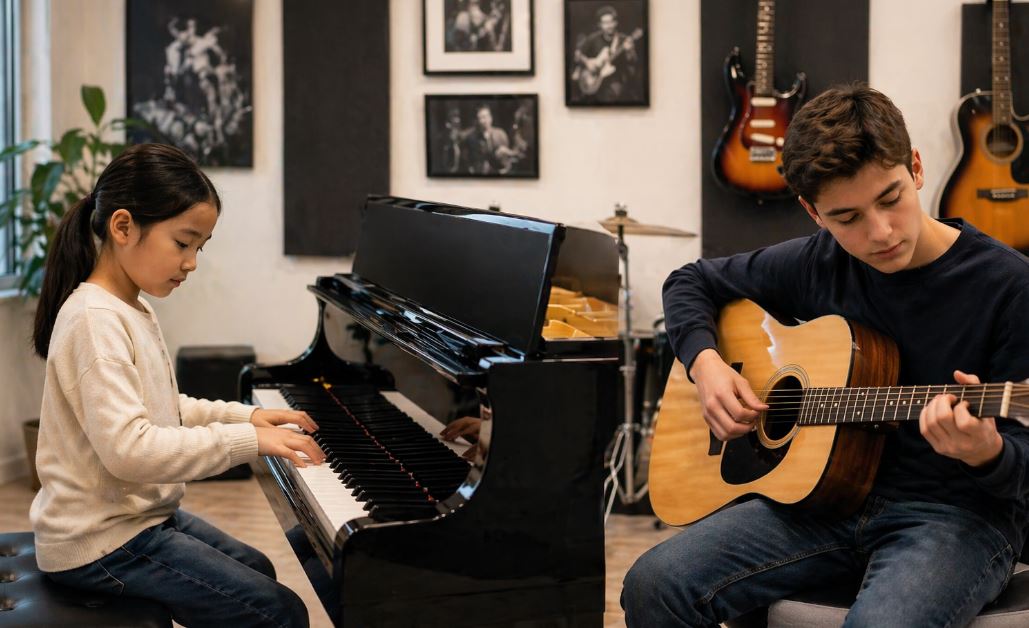
Seeing a piano, guitar, drums and other instruments in a real teaching environment can make the decision much more concrete.
Music Lessons for Kids in Burlington
There may not be one perfect age to start music lessons, but there are plenty of signs that a child is ready.
If your child:
- Shows genuine interest in music
- Can focus for a short lesson
- Follows simple instructions
- Is willing to try things more than once
- Is excited about an instrument or singing
…it may be an excellent time to begin.
Capstone Music provides music lessons in Burlington for piano, guitar, drums, vocals, ukulele, bass, songwriting and more, taught by experienced musicians in a welcoming environment.
If your child is interested but you’re still unsure where to start, that is completely fine.
Contact Capstone Music to learn more about lessons, visit the studio or find the right starting point for your young musician.for kids Burlington, guitar lessons for kids Burlington, drum lessons for kids, vocal lessons for kids