Guitar lessons in Burlington are a popular choice for kids and teens who are excited by the music they hear every day. From pop and rock to country, folk, worship music, and songwriting, guitar is one of the most versatile instruments a student can learn. It is also portable, expressive, and highly motivating for children who want to play recognizable songs.
For parents, however, starting guitar can raise a few practical questions. What age is best? Should a child start on acoustic or electric guitar? How much practice is realistic? And how do you know whether your child is ready for lessons?
The good news is that guitar can be an excellent beginner instrument when students have the right-sized instrument, a supportive teacher, and realistic expectations at the beginning.
Did you know? At Capstone Music in Burlington, guitar lessons are designed for beginners, kids, teens, and adults, with instructors who help students build skills while learning music they actually enjoy. Explore guitar lesson options at https://capstonemusic.ca/
Why Guitar Is a Great Instrument for Beginners
Guitar is appealing because it connects quickly to songs students already know. Many beginners are motivated by the idea of learning chords, strumming patterns, riffs, or melodies from their favourite artists.
Unlike some instruments that feel mostly formal at the beginning, guitar often gives students a sense of personal expression early on. Once a student learns a few basic chords, they may be able to play simple versions of familiar songs. That early sense of progress can be very encouraging.
Guitar also supports many musical paths. Students may eventually explore:
- Acoustic guitar
- Electric guitar
- Bass guitar
- Songwriting
- Rock, pop, blues, country, or folk
- Band performance
- Improvisation
This flexibility makes guitar especially attractive for students who are creative, social, or inspired by modern music.
What Age Should Kids Start Guitar Lessons?
Many children are ready to begin guitar lessons around ages seven to nine, although some may start earlier with the right-sized instrument and a patient teaching approach. Because guitar requires finger strength, coordination, and hand positioning, very young beginners may find it more physically challenging than piano.
A child may be ready for guitar lessons if they can:
- Follow simple instructions
- Focus for short lesson periods
- Hold the instrument comfortably
- Use both hands together
- Show interest in guitar-based music
- Practice short exercises at home
For younger students, the first goal is not speed or technical perfection. It is comfort, confidence, and building a positive relationship with the instrument.
Acoustic vs Electric Guitar: Which Should Beginners Choose?
This is one of the most common questions parents ask – what are they key differences?
Acoustic Guitar
Acoustic guitar is simple and portable. It does not require an amplifier and is often used for singer-songwriter, folk, country, and pop styles. However, acoustic strings can sometimes be harder on beginner fingers, especially on lower-quality instruments.
Electric Guitar
Electric guitar can be easier for some beginners because the strings are often lighter and easier to press. It does require an amplifier, but it can be very motivating for students interested in rock, pop, blues, or lead guitar.
The Best Choice
The best beginner guitar is usually the one that fits the student’s body, musical interests, and comfort level. A child who loves rock music may be more motivated by electric guitar. A student who wants to sing and play songs may enjoy acoustic guitar.
The most important factor is choosing an instrument that is properly sized and easy enough to play.
What Happens in Beginner Guitar Lessons?
Beginner guitar lessons usually focus on building coordination, comfort, rhythm, and early musical confidence.
Students may learn:
- How to hold the guitar
- Proper hand and finger position
- Basic chords
- Simple strumming patterns
- Easy melodies and riffs
- Rhythm and timing
- Tuning basics
- Reading chord charts or tablature
- Beginner songs
A good guitar teacher will balance technical fundamentals with music that keeps the student engaged. For many kids, motivation improves when lessons include songs they recognize.
How Much Should Kids Practice Guitar?
For beginner guitar students, short and consistent practice is better than occasional long sessions. Many children do well with 10 to 15 minutes of practice several days per week. There are lifetime benefits to early musical training!
At the beginning, practice may involve:
- Reviewing chord shapes
- Switching between two chords
- Practicing short strumming patterns
- Playing simple riffs
- Building finger strength gradually
Parents should expect some early discomfort in the fingertips. This is normal, but it should not be extreme. A properly set-up guitar can make a big difference.
Choosing Guitar Lessons in Burlington
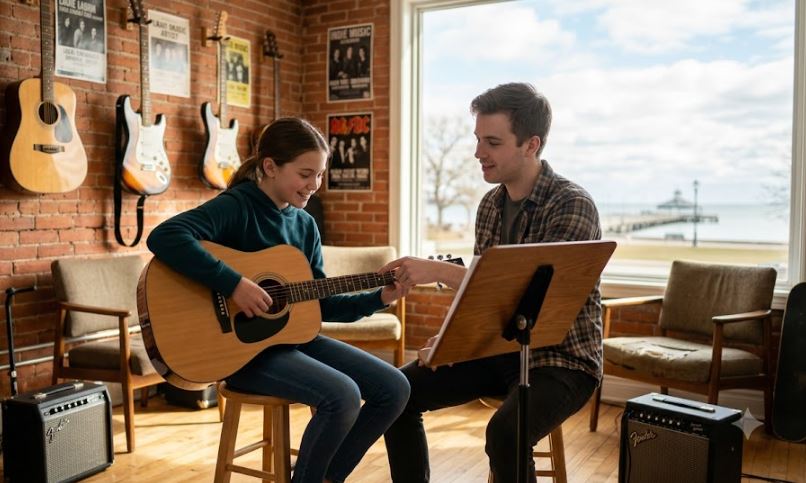
For families searching for guitar lessons in Burlington, the right teacher and environment matter. A skilled instructor can help prevent frustration by choosing appropriate songs, adjusting the pace, and teaching technique in a way that feels manageable.
When comparing guitar lessons, parents should look for:
- Beginner-friendly instruction
- Teachers experienced with kids and teens
- Lessons tailored to musical interests
- Guidance on instrument selection
- Clear practice expectations
- A supportive studio environment
- Opportunities for performance or band programs
This is especially important for guitar because students often have strong style preferences. A teacher who understands those preferences can help keep lessons motivating.
Guitar Lessons and Confidence
Guitar can be especially powerful for building confidence. Students often feel proud when they can play a recognizable song, perform a riff, or accompany themselves while singing.
For some children and teens, guitar becomes more than an instrument. It becomes a way to express emotion, connect with friends, and develop a creative identity.
Music education can support creativity, discipline, and personal development. The Royal Conservatory of Music provides helpful insight into how music study can support broader growth and learning: https://www.rcmusic.com/about-us/rcm-neuroscience/why-study-music
What If My Child Gets Frustrated?
Guitar can feel challenging in the first few weeks. Chords may buzz, fingers may feel awkward, and switching between shapes takes time. This does not mean the student is not musical.
Parents can help by keeping expectations realistic. Early progress may look like:
- Holding the guitar comfortably
- Remembering finger positions
- Playing one clean chord
- Keeping a steady rhythm
- Practicing without giving up
Encouragement matters. Guitar rewards persistence, and once the first few skills click, students often gain momentum quickly.
Guitar Lessons for Teens and Adults
Guitar is also an excellent choice for teens and adults. Many older beginners are motivated by specific songs, artists, or styles, which can make lessons feel personally meaningful.
Adult and teen beginners may want to:
- Learn favourite songs
- Play acoustic guitar for personal enjoyment
- Join a band or group program
- Write songs
- Improve rhythm and confidence
- Learn electric guitar technique
Because guitar is so adaptable, lessons can be shaped around each student’s goals.
Helping Your Child Stay Motivated
Motivation often comes from connection. If students enjoy the music they are learning, they are more likely to practice.
Parents can support motivation by:
- Letting the teacher know what music the child likes
- Encouraging short, regular practice
- Celebrating small improvements
- Avoiding comparisons
- Keeping the instrument accessible at home
- Supporting performances or group opportunities
For many students, the goal is not just to “learn guitar.” It is to enjoy making music.
Building Skills One Chord at a Time
Guitar lessons can be an exciting starting point for kids, teens, and adults in Burlington. With the right instrument, teacher, and practice routine, students can build confidence while learning music that feels relevant and enjoyable.
For parents, the best first step is choosing a learning environment that supports both technique and motivation. When students feel encouraged and connected to the music, guitar can become a lifelong creative outlet.