
Choosing a first instrument is an exciting step, but it can also feel overwhelming, especially for families and adult learners in Burlington looking to start music lessons. Two of the most popular options, piano and guitar, each offer unique benefits, learning styles, and long-term opportunities.
The right choice depends on the student’s interests, personality, and goals. While both instruments are excellent starting points, understanding how they differ can make the decision much easier – and help ensure a positive, long-term experience with music.
Did you know? At Capstone Music in Burlington, we offer both piano and guitar lessons for kids, teens, and adults, with experienced instructors who tailor each lesson to the student’s pace and goals. Explore lesson options!
Understanding the Core Differences
At a basic level, piano and guitar approach music in very different ways.
Piano is a visual and linear instrument. Notes are laid out clearly from low to high, making it easier for beginners to understand scales, chords, and musical patterns. Each key produces a single, consistent note, which simplifies early learning.
Guitar, on the other hand, is more complex in its layout. The same note can be played in multiple places on the fretboard, and beginners must learn hand positioning, finger strength, and coordination early on.
This doesn’t make guitar harder overall, but it does mean the initial learning experience can feel different.
Which Instrument Is Easier to Learn?
For most beginners, piano is often considered easier to start.
Why Piano May Be Easier:
- Notes are visually organized
- No tuning required during play
- Immediate sound production
- Easier introduction to music theory
Why Guitar Can Feel More Challenging Early:
- Finger strength takes time to develop
- Chords can be physically demanding at first
- Requires tuning and maintenance
- Greater coordination between hands
However, many students find guitar becomes more intuitive over time, especially once basic chords are mastered.
Piano vs Guitar for Kids
When choosing an instrument for children, additional factors come into play.
Piano for Kids
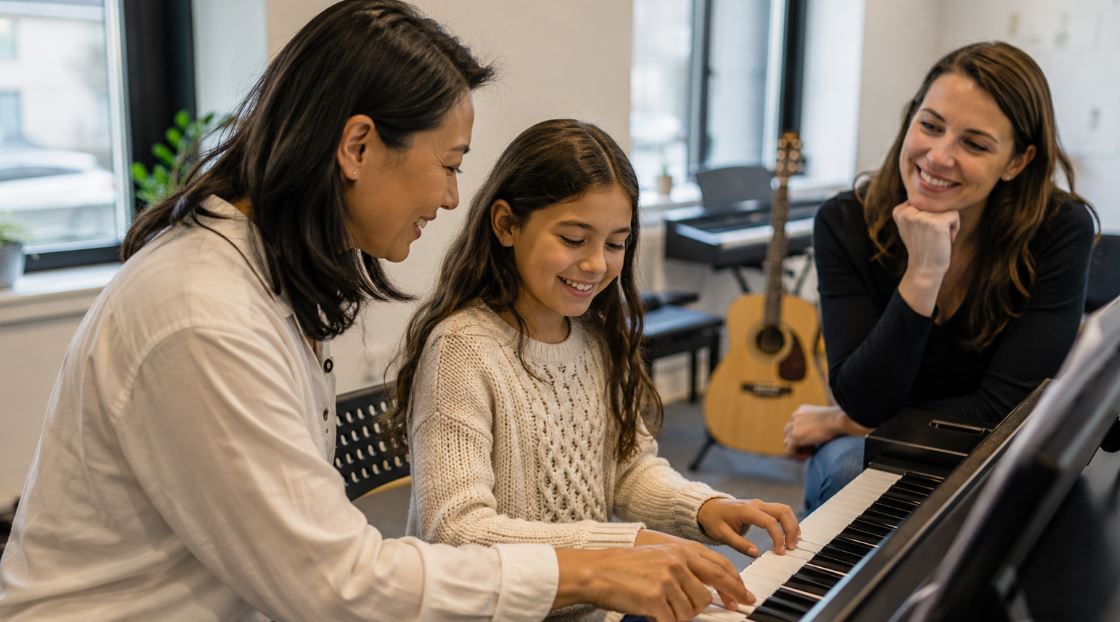
Piano is often recommended for younger beginners because it builds a strong musical foundation. It helps children:
- Understand rhythm and timing
- Learn note reading more easily
- Develop coordination between both hands
Guitar for Kids
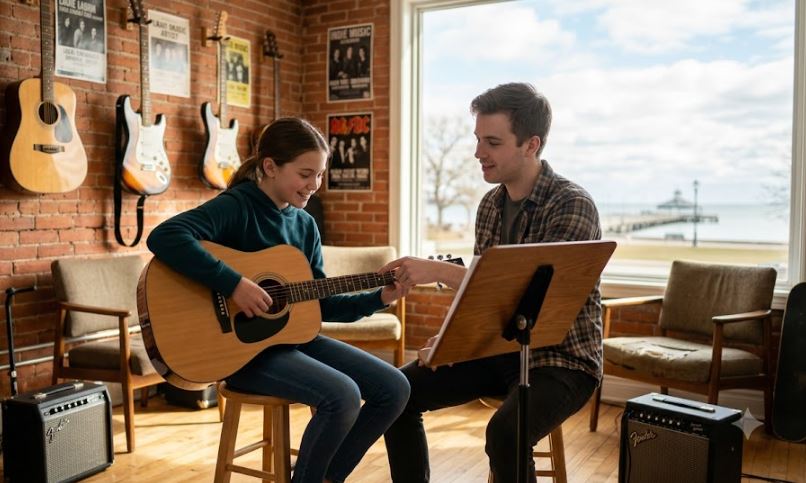
Guitar can be a great choice for kids who are highly motivated, especially if they’re inspired by music they enjoy. It tends to appeal to:
- Older children or teens
- Students interested in pop, rock, or songwriting
- Kids who prefer a more portable instrument
Piano vs Guitar for Adults
Adults often choose instruments based on personal interest, lifestyle, and goals.
Piano for Adults
- Ideal for structured learning
- Great for relaxation and stress relief
- Easier to play simple songs early on
Guitar for Adults
- Portable and versatile
- Great for social playing and self-expression
- Popular for learning songs quickly
Cost and Accessibility
Both instruments are accessible, but there are some differences.
Piano Costs
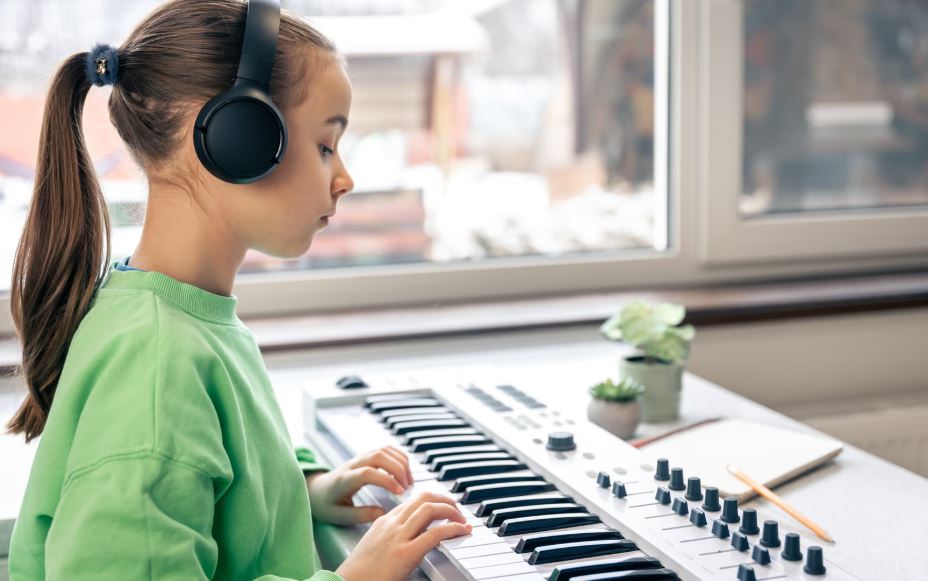
- Digital keyboards offer affordable entry points
- Acoustic pianos require more space and investment
- Minimal maintenance for digital options
Guitar Costs
- Lower upfront cost
- Wide variety of beginner options
- Ongoing maintenance such as string replacement
Learning Styles and Musical Goals
The right instrument often depends on how the student prefers to learn.
Piano tends to suit:
- Visual learners
- Students interested in structured progression
- Those who want a strong foundation in music theory
Guitar tends to suit:
- Students who learn by ear
- Those interested in modern music
- Individuals who enjoy flexible, informal playing
According to the Royal Conservatory of Music, early exposure to structured music education can support long-term development and musical confidence.
Choosing Music Lessons in Burlington: What to Consider
For those in Burlington, selecting the right instrument is only part of the decision. Choosing the right learning environment is equally important.
When evaluating music lessons, consider:
- Instructor experience and teaching style
- Whether lessons are tailored to beginners
- Opportunities for progression and performance
- A supportive, engaging learning environment
Having access to in-person instruction and a structured program can make a significant difference, especially for beginners who benefit from guidance and consistency.
Long-Term Progress and Versatility
Both piano and guitar offer strong long-term potential.
Piano provides:
- A deep understanding of music theory
- A foundation for learning additional instruments
- Opportunities across classical, jazz, and contemporary styles
Guitar offers:
- Versatility across genres
- Opportunities for group playing and performance
- Strong connection to songwriting and creativity
Neither instrument limits a student’s growth yet the choice simply shapes the journey.
So, Which Is Better?
The answer depends on the individual.
Choose piano if:
- You want a clear, structured learning path
- You’re starting at a younger age
- You’re interested in building foundational skills
Choose guitar if:
- You’re motivated by modern music
- You want a portable, flexible instrument
- You prefer a more relaxed learning style
The Best Choice Is the One That Keeps You Engaged
Ultimately, the most important factor is interest. Students who enjoy their instrument are far more likely to stay consistent, practice regularly, and make progress.
For families and individuals in Burlington, starting with the right instrument – and the right instruction – can set the stage for long-term success and enjoyment.
If you’re unsure which instrument to choose, trying a few lessons can provide valuable clarity and help you find the best fit.