

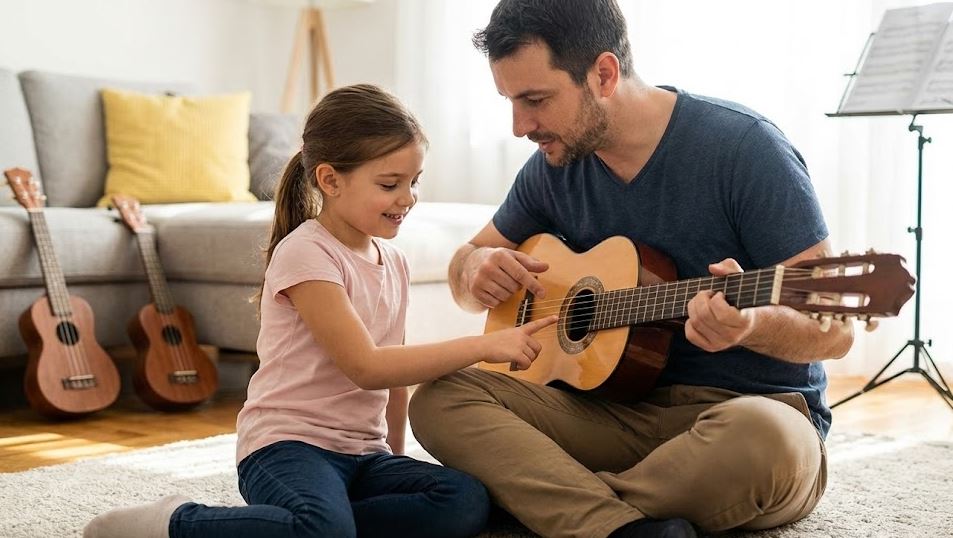
Choosing a starter guitar for a child is an exciting milestone—whether they’re joining a music program, inspired by their favourite bands, or simply curious about learning something new. But with so many guitar types, sizes, brands, and price points, parents often feel unsure about what to buy. A good beginner guitar should be comfortable to play, properly sized for the child, and easy enough to learn on that it encourages practice rather than frustration.
A child’s first guitar can shape their confidence, their motivation, and even how quickly they progress. A poor fit—too large, too heavy, hard to press the strings, or constantly out of tune—can discourage even the most enthusiastic beginner. That’s why selecting the right starter guitar is just as important as finding the right teacher or program.
Did you know? Capstone Music in Burlington offers guitar lessons for children of all ages, taught by multiple experienced instructors—so your child can find the teaching style that fits them best. Learn more or book lessons here: https://capstonemusic.ca/guitar-lessons-burlington/
Start With the Right Guitar Size
The first decision isn’t about brand—it’s about size. Children need guitars scaled to their bodies so they can reach the frets, hold the instrument properly, and develop good technique.
Here is a simple size guide:
-
Ages 4–6: 1/4-size guitar
-
Ages 6–9: 1/2-size guitar
-
Ages 9–12: 3/4-size guitar
-
Ages 12+ (depending on height): full-size guitar
Classical (nylon-string) guitars are also often slightly bulkier around the body, so children with smaller frames sometimes prefer 1/2 or 3/4 acoustic or electric options instead.
A properly sized guitar allows a child to:
-
Hold it comfortably
-
Reach all notes
-
Press strings without strain
-
Build confidence quickly
Trying a few sizes in person—with help from a teacher or music school—is often the most reliable approach.
Nylon-String, Steel-String, or Electric: Which Is Best?
Many parents assume that beginners should start on a nylon-string classical guitar, but the right choice depends on the child’s interests, hand strength, and long-term goals.
Nylon-String Classical Guitar (Warm tone, softer strings)
Pros:
-
Softer strings—easier for sensitive hands
-
Great for fingerpicking
-
Quieter when practicing
Cons:
-
Larger body shape can feel bulky
-
Not ideal for rock/pop styles
Great for kids who like fingerstyle music, calm tones, or classical guitar.
Steel-String Acoustic Guitar (Bright, loud, versatile)
Pros:
-
Works for pop, country, rock, singer-songwriter styles
-
Great transitional instrument
-
Often slightly smaller than classical models
Cons:
-
Steel strings can feel tough at first
-
Requires more finger strength
Great for kids who love Taylor Swift, Ed Sheeran, acoustic covers, or campfire songs.
Electric Guitar (Easy to play, highly exciting for kids)
Pros:
-
Thinner neck—easier for small hands
-
Very light string tension—great for beginners
-
Encourages practice because it’s fun
-
Works for rock, pop, punk, metal, blues
Cons:
-
Needs an amp (small starter amps are inexpensive)
Great for kids who love rock bands, electric solos, or high-energy music.
According to the Royal Conservatory and many music education organizations, the most important factor is interest—children learn faster when they enjoy the sound and style of the guitar they’re learning on.
Starter Guitar Brands Worth Considering
You don’t need an expensive guitar for a beginner—just one with good tuning stability, proper action (string height), and reasonable tone.
Here are trusted beginner brands often recommended by music teachers:
Acoustic or Classical
-
Yamaha (excellent quality at beginner prices)
-
Cordoba (great nylon-string options)
-
Fender FA Series
-
Hohner (small beginner-friendly models)
Electric
-
Squier by Fender (very popular for kids)
-
Yamaha Pacifica
-
Ibanez Gio Series
-
Epiphone Les Paul Special (lightweight, student-friendly)
These brands offer reliable instruments without the high cost of professional gear. Parents should avoid unbranded or ultra-cheap guitars from big box retailers—they often arrive poorly set up, hard to tune, and difficult to play.
Budget: How Much Should a Parent Spend on a Starter Guitar?
You don’t need to overspend, but a quality beginner guitar is an investment in your child’s enthusiasm.
Approximate price ranges:
-
Nylon classical: $120–$250
-
Steel-string acoustic: $150–$300
-
Electric guitar + small amp bundle: $200–$350
A small bump in quality can dramatically improve tuning stability and playability, which helps kids stick with lessons longer.
Get the Guitar Professionally Set Up
A good setup (adjusting string height, tuning stability, and fret action) makes a huge difference, especially for children. Many guitars—even good ones—need small adjustments out of the box.
A professional setup helps:
-
Reduce finger pain
-
Improve sound quality
-
Make pressing strings easier
-
Keep the instrument in tune longer
Teachers often notice instantly when a beginner guitar is too hard to play, so it’s worth the extra step.
Let Your Child Try Different Styles and Instructors
Finding the right teacher is just as important as the right guitar. Children respond differently to various styles of teaching, personalities, and lesson formats.
Some kids thrive with:
-
Energetic, high-interaction instructors
-
Patient, detail-oriented teachers
-
Group environments
-
Rock band programs
-
Structured, classical approaches
-
Flexible, modern music-based curricula
That’s why learning environments with multiple guitar instructors give families options—they can match the teacher to the child’s personality, learning style, and musical interests.
Consider a Program With Performance Opportunities
Kids who play with others often progress faster, gain confidence, and stay motivated. Programs that blend private lessons with group band experiences give young musicians a sense of teamwork and excitement.
This combination helps children:
-
Stay engaged
-
Set musical goals
-
Learn stage presence
-
Build long-term skills
-
Practice consistently
These programs also let children apply what they’re learning in a real-musician environment.
Final Tip: Choose a Guitar They’re Excited About
The best starter guitar is one that motivates your child to pick it up—because passion drives progress. If they love the sound, style, and feel of the guitar, practicing becomes a natural habit rather than a chore.
Once you have the right guitar and the right learning environment, your child’s musical journey becomes something they’ll be proud to grow into.